
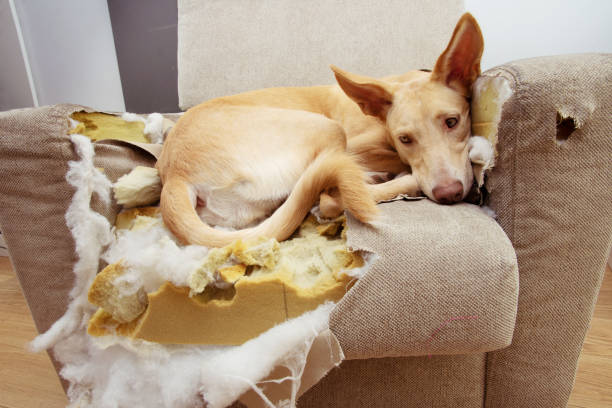
Hello, all, and welcome back! Today, I want to talk about separation anxiety. You often hear owners complain about their dog who gets upset when they go out, but what does that really mean? How does something like that develop? How do you overcome it? Most people are familiar with casual bouts of canine mischief that occur when the owner is not present to object, but separation anxiety goes much deeper.
Separation anxiety or SA for short is a stress response a dog exhibits when they are separated or away from their bonded person/people. When a dog experiences SA, it is comparable to panic attacks in humans. In the case of a human, think about someone with a fear of the dark. When left in a dark room, this person may exhibit signs of stress such as dry mouth, increased respiration, or intense nausea. Similarly, a dog who suffers from SA is bombarded with an increase in the same stress hormones each time they are left alone.
There is no sole factor to blame for SA in dogs, but rather a plethora of potential triggers or dispositions which could set off the behavior. In some cases, it can be related to environmental or dynamic changes which the dog found to be distressing or stressful. This could could include a few different things:
Shift in household dynamic, such as death or divorce.
Shift in living situation or way of living, such as moving to a different country/region or rehoming.
Shift in daily schedule, such as changing shifts at your job or going back to school.
In other cases, dogs who have not experienced a massive change or trauma still develop SA due to genetic predispositions.
Dogs who have SA tend to pick up on signs and cues that indicate their owner’s impending departure, such as picking up your car keys or grabbing your purse. This often leads to the dog demonstrating distress before the bonded person even departs.
What does separation anxiety look like?

There are 7 key characteristics to observe when attempting to identify SA in your own dog:
Pacing: A dog who is distressed by the exit of their bonded person may be too restless to calm down, and might turn to walking back and forth for the duration of the isolation.
Vocalizing: Barking/whining are usual responses to being isolated, but dogs who suffer from SA may continue to vocalize until the return of their owner.
Loss of appetite: Dogs suffering from symptoms of SA may show no interest in food, no matter how food motivated they are when not in distress.
Destruction: Often times, household items are damaged or chewed by dogs with SA. These can range from small things, such as couch cushions or television remotes, to more concerning items such as walls and doors.
Elimination: A dog who is fully housetrained and normally adheres to such may have an “accident.” Some dogs can experience gastrointestinal upset due to the intensity of the emotional disturbance, which can lead to diarrhea.
Drooling: When under stress, some dogs may drool excessively. This can lead to them saturating any area from the neck to the paws.
Escape: Some dogs who suffer from extreme SA may attempt to escape their enclosure, whether that be a crate or a room/whole house, which can lead to a range of injuries.
How do we overcome separation anxiety?
The process of prevailing over separation anxiety is a 3-pronged approach. As I mentioned before, there are a multitude of factors which can play into the development of separation anxiety in dogs. Because of this, multiple things must be identified and worked on.
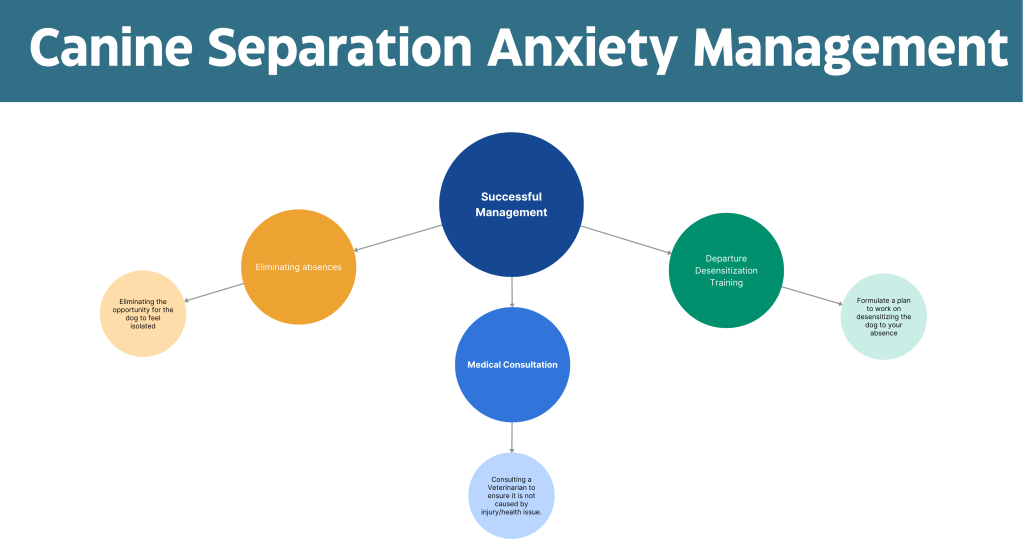
Eliminating Absences
First and foremost, you must eliminate absences. Now, this does not mean put your entire life on hold, quit your job or schooling, and dedicate every second of every day to your dog. As nice as that sounds, it isn’t realistic. Try to find a friend or family member who could watch the dog during the day, look into local day care and day-board kennels, or hire an in-home sitter on a site like Rover.com or Care.com. If you work a job where your dog can be present, or have the option to work from home, that is something to consider as well.
When a dog with SA is consistently left alone, the stress of the situation will push them to practice these unwanted behaviors. This can solidify these behaviors, which not only increases the likelihood of reoccurrence, it makes it more difficult to recondition. When constantly exposed to fear inducing stimuli, a dog will remain in a chronic stress cycle which affects their ability to learn.
Because of this, eliminating absences is a non-negotiable step of the process. It will take increased effort on everyone’s part, but preparedness to keep your dog feeling safe is the key to seeing a change in behavior.
Medical Consultation
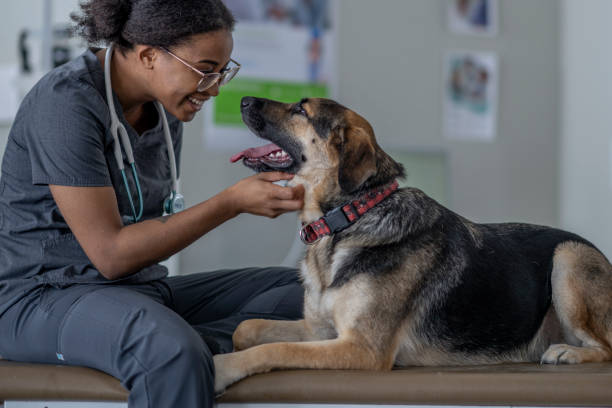
Sometimes, a new behavioral issue arising in your dog may have an underlying medical cause. It is important to remember that it is not uncommon for dogs to actively attempt to hide signs that they may be injured, sick, or in pain. Because of this, it is essential for dogs who are struggling with any kind of behavioral concern to be thoroughly evaluated by a veterinarian who is knowledgeable in behavior concerns and pharmacology.
-Owners can often misidentify signs of the following illnesses as SA:
-Cognitive Dysfunction Syndrome
-Urinary diseases/illnesses such as kidney stones or urinary tract infection.
Departure Desensitization Training
Once the groundwork has been laid out, training can be started. By using a process called desensitization (which is defined as gradual exposure to a triggering stimuli, increasing slowly until the desired “tolerance” for the trigger is reached,) you can ease your dog’s fear of being alone.
Desensitization is considered the most effective methodology for training dogs with SA to be left alone comfortably due to the fact that the process shifts your dog’s emotional response to your departure.
The most essential piece of this process is keeping your dog below threshold. This means that you will incrementally “practice” departing in training sessions and return prior to the start of aforementioned stress responses such as vocalization, excessive drooling, or destructive behaviors.
The Dog Trainer’s Den Step-by-Step Guide for Departure Desensitization Training at Home:
Over the course of this structured separation anxiety training, your dog is going to begin to understand that you going out for a 20-minute coffee run is not the end of the world. The duration and timeline of training is widely dependent from dog to dog, but sticking to the training is crucial as it has a good prognosis for dogs suffering from SA.
Before beginning the training, it is important to choose a place in your home where your dog is safe and feels comfortable when you are home.
Find your dog’s baseline tolerance

To begin the actual desensitization training, you need to get an idea of how long they can be left alone before exhibiting signs of stress. There are a few different ways you can do this, one being to set up a dog camera or other camera where you can easily watch them. If there is more than one device available to you, try using FaceTime or another video chatting platform to call one device, and leave that device angled on your dog when you leave.
After leaving, observe your dog through the camera and time how long you are able to be away before your dog shows signs of distress. This could be something as miniscule as lip licking, or staring very intently, so be sure to pay close attention. Return inside, and take note of exactly how long you were able to be out before your dog became stressed. Don’t be discouraged if this number is very low or even 0 seconds. If such occurs, door desensitization will be a priority.
Formulate a training plan
It is essential to have a plan for each training session that outlines the quantity of departure reps and how long each will last. The baseline number you acquired in step 1 will help you to know where to start.
Your training sessions are essentially a series of repetitions which entails you leaving your dog and returning before he/she begins to exhibit any signs of stress.
The usual desensitization training session for SA will consist of 3 main stages:
Warm up (2-8 reps)
Goal Stage (1 rep)
Cool down (1-3 reps)
The need for a warm up or cool down, as well as the number of reps completed, is dependent on your dog. It can be tedious and will require some figuring-it-out. Paying close attention to how your dog responds to each cue or movement is important here.
Eliminate or desensitize your dog to departure cues
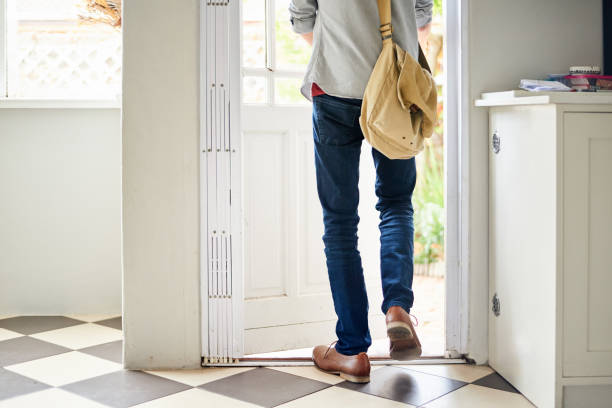
As I mentioned before, departure cues are any of the small things that we do before leaving the home, such as picking up our keys, packing a bag, or putting on shoes. It is recommended that you eliminate as many of these as possible to make practicing more manageable. An example would be leaving your dog in a specific room they feel safe in to avoid him/her seeing you grab your keys or putting your shoes on.
Unfortunately, some cues are unavoidable, such as closing a garage door or starting a car. If a cue that causes stress in your dog cannot be eliminated, your dog must be desensitized to that cue before you begin carrying out your training plan.
An example might be that your dog becomes anxious whenever you pick up your car keys. This requires desensitization. So, do a training session where you practice picking up your keys without leaving the area. Upon repeating several times, you will find your dog becoming uninterested in the keys. From there, you can move on to leaving after picking up the keys.
While treats are regularly used in other kinds of desensitization training, I don’t recommend using them for SA training. The reason being that you do not necessarily want your dog to be excited by you opening the door, you want them to be neutral to any coming or going in the home.

Begin your training plan
Now that we have discussed everything to prepare for successful training, let’s talk about what training will look like.
The warm up stage:
Your warm up reps should be much shorter than your goal rep, and should be randomized to prevent your dog from thinking the reps are going to increase in duration. This can be done by alternating the duration of the reps (for example, a 10 second rep followed by a 35 second rep.)
The goal stage:
The goal rep is the longest rep you will leave your dog for. Only one of these reps will be done per session to avoid your dog becoming overly stressed. As I mentioned before, a stress reaction affects a dog’s ability to learn. The objective is to end reps and training before your dog becomes stressed, not as they begin to exhibit signs of stress. Your starting goal duration should be a few seconds shorter than the baseline number you collected before beginning training.
Example: if your dog’s baseline was 30 seconds, your goal rep for the first session should be 20 seconds.
The cool down stage:
If you find that a cool down stage is beneficial to your dog, you can add a few short departure reps in to avoid always ending on the hardest stage. However, as a trainer, I sometimes find it beneficial to end training and let a dog sort of “sit and think” after they have made big progress on something difficult.
| Stage | Rep number | Duration of reps |
| warm up | 1 | 15 seconds |
| warm up | 2 | 10 seconds |
| warm up | 3 | 11 seconds |
| warm up | 4 | 8 seconds |
| warm up | 5 | 15 seconds |
| warm up | 6 | 11 seconds |
| GOAL | 7 | 25 seconds |
| cool down | 8 | 10 seconds |
| cool down | 9 | 5 seconds |
| cool down | 10 | 8 seconds |
Additional information
When it comes to frequency of training, I don’t recommend doing more than 2-3 sessions a day, 5 days a week. If your sessions run longer than 15-20 minutes, I recommend doing 1 per day. Rest is important for both you and your dog.
Your dog will show you when it is okay to increase goal duration. If he/she looks relaxed or even bored (relaxed eyes, neutral ear position, in a relaxed position,) it may be a good time to increase duration. Remember to be conscious of how much you are increasing though, you do not want any massive jumps. If your baseline is under a few minutes, the goal duration should only increase by about 10-30 seconds from one session to the next.
Remember not to get discouraged, training times can vary greatly. It is essential to stick to your plan once implemented. SA desensitization training can get very tedious, especially so when you realize how it limits your ability to up-and-go. However, it is important to remember when doing this type of training, you are basically showing your dog “you can trust me, I am coming back soon and I will be back before you have any reason to get upset.” If we introduce scenarios where they are left alone to go over threshold, that trusting foundation can never be built.
With some hard work, some love, some patience, and a little bit of dog psychology knowledge, you can get your canine companion over this hump.
Thank you all for joining me yet again. I hope this post can provide some insight into better understanding your dog with separation anxiety. As always, have a great morning, afternoon, or evening… oh, and pet your dog for me.
 The Dog Trainer's Den
Leave a comment