
Hello, all, and welcome back! I apologize for the lack of consistent uploads, but I have been doubling down and extensively researching specifically for this article. I want to talk a bit about fully understanding your dog’s dietary needs. Now, we know dogs need the same essential dietary building blocks we do (amino acids, proteins, fats,) but how much? Which ones? Which ones can they produce on their own? Today, I’m covering all of that and more!

Now, first and foremost, I want to start off by saying I am not a Board Certified Veterinary Nutritionist. All of the information I am sharing with you today is based on guidelines and rules established by the AAFCO (The Association of American Feed Control Officials,) which is a voluntary organization dedicated to ensuring proper dietary standards for animal feed. I always recommend seeing a Veterinary Nutritionist if you have dietary concerns for your pet, or need help constructing a balanced diet
The History of Canine Nutrition
Throughout most of man and canine’s long journey, people fed their animals things they could spare; crusts of bread, meat and vegetable trimmings, and occasionally a bone or two. However, in 1860, the first commercial dog food was released and sold in England. By the late 1910’s to the 1920’s, dog owners could buy a canned dog food made with meat from horses.
World War II and the economic boom it brought increased the demand for both dry and wet dog food. By the 1950’s, manufacturers discovered how to produce dog kibble with a machine originally designed to make breakfast cereal.
As the dog food industry soared, the U.S. Food and Drug Administration (FDA) began regulating the safety of kibble and wet food. The Association of American Feed Control Officials (AAFCO) began constructing, publishing, and consistently updating a Dog Food Nutrient Profile based on the current understanding of a dog’s nutritional needs.
Understanding the basics
As I mentioned before, many of the same crucial nutrients we rely on are pertinent to a dog’s diet. The energy for everything a dog does comes from the proteins, fats, and carbohydrates they consume.
Proteins make up large amounts of every cell in a dog’s body, from muscles and bones to eyes and teeth. The building blocks of these proteins are amino acids. Dogs can produce roughly half of their necessary amino acids, but there are 10 they are unable to produce. These are histidine, isoleucine, leucine, lysine, methionine, phenylalanine, threonine, tryptophan, arginine and valine.
Nutrients that cannot be produced by the body are referred to as “essential nutrients.” Dogs must get these nutrients from the food they eat. Proteins from animals such as beef, fish, poultry, eggs, and lamb yield a complete set of amino acids. Grains can supply some but not all of the necessary amino acids. A deficiency in any of the 10 essential amino acids can cause health issues ranging from mild to severe. The Dog Food Nutrient Profile published by the AAFCO states that food for adult dogs should contain at least 18% protein, while foods for puppies should contain no less than 22% protein.
Fats also play an important role in your dog’s body. They are the most concentrated source of energy, and they also contribute to proper cell structure and function. Fats are made up of types of molecules referred to as “fatty acids.” Two types of fatty acids are crucial to keeping a dog’s skin and coat healthy. These essential fatty acids are omega-6 and omega-3. Dogs who do not receive enough of these fatty acids from their diet may develop dry/brittle fur, scabs/sores on the skin, and even a weakened immune system.
Most commercially developed dog foods contain much higher levels of omega-6 fatty acids than omega-3s. Some research supports the idea that the ideal ratio of omega-6s to omega-3s is between 5 to 1 and 10 to 1. The Dog Food Nutrient Profile established by the AAFCO states that foods for adult dogs should contain no less than 5% fat, and that puppy foods must contain at least 8% fat.
Now, let’s talk carbs. Carbohydrates are not considered an essential part of canine nutrition, but dogs are able to derive energy from carbohydrates as well as fats and proteins. Carbohydrates are the sugars, starches, and dietary fibers found in foods. Dog food manufacturers add carbohydrates (typically in the form of grains, corn, legumes, and other vegetables,) because they are more cost effective than meats and can aid in rounding out the nutrient profile of the product.
Dog foods can also contain additives for dietary fiber such as oat bran, rice hulls, or peanut shells. These ingredients are not digested, but help to make the dog feel “full.” Foods which are rich in carbohydrates are not as easily digested as meats, but studies show that compared to their wolf ancestors, dogs have evolved an increased ability to digest starchy foods. There is no requirement for a particular percentage of carbohydrates in dog food. Most commercial dog foods contain between 30% and 70% carbohydrates.
Minerals are another imperative piece to the canine nutrition puzzle. There are 12 essential minerals for dogs. Calcium and Phosphorus are necessary to maintain strong bones and teeth. Iron is necessary to form hemoglobin, the molecule in red blood cells that is responsible for carrying oxygen.
Magnesium, potassium, sodium, and chloride aid in proper nerve and muscle function. Zinc is essential for the healing of wounds, production of cells, and maintenance of healthy skin. Iodine is responsible for the maintenance of thyroid functions and helps to regulate the metabolism.
Dogs need some minerals like copper, molybdenum, and selenium, but only in small amounts. However, these are still crucial to the chemical reactions that take place within a dog’s body. Dogs that receive too little, or too much, of these minerals can have serious health problems. These issues can include poor growth, weakness, skin lesions, and loss of bone mass. The AAFCO has guidelines for each of these minerals, and they are listed in the table below.
| Minerals | Units per kcal | Growth/Reproduction Minimum | Adult Maintenance Minimum | Maximum |
| Calcium | g | 3.0 | 1.25 | 6.25 |
| Phosphorous | g | 2.5 | 1.00 | 4.0 |
| Calcium to Phosphorous Ratio | 1:1 | 1:1 | 2:1 | |
| Potassium | g | 1.5 | 1.5 | |
| Sodium | g | 0.80 | 0.20 | |
| Chloride | g | 1.10 | .30 | |
| Magnesium | g | 0.15 | 0.15 | |
| Iron | mg | 22 | 10 | |
| Copper | mg | 3.1 | 1.83 | |
| Manganese | mg | 1.8 | 1.25 | |
| Zinc | mg | 25 | 20 | |
| Iodine | mg | 0.25 | 0.25 | 2.75 |
| Selenium | mg | 0.09 | 0.08 | 0.5 |
You can’t have minerals without vitamins. You may like to start your day with a freshly squeezed glass of orange juice, but your dog won’t need one. In contrast to humans, dogs are capable of producing the vitamin c they need. However, they do still rely on diet to get other essential vitamins. Vitamin A is crucial to vision, growth, and immune function in dogs. Vitamin D aids in maintaining adequate levels of minerals in the body. Vitamin E is an antioxidant responsible for protecting cells from damage. Minimum and maximum levels are disclosed in the Dog Food Nutrient Profile (and listed below for convenience.) Similarly to minerals, deficiencies or excess amounts of vitamins can lead to serious health issues.
| Vitamins | Unit per kcal | Growth/Reproduction Minimum | Adult Maintenance Minimum | Maximum |
| Vitamin A | IU | 1250 | 1250 | 62500 |
| Vitamin D | IU | 125 | 125 | 750 |
| Vitamin E | IU | 12.5 | 12.5 | |
| Thiamine | mg | 0.56 | 0.56 | |
| Riboflavin | mg | 1.3 | 1.3 | |
| Pantothenic Acid | mg | 3.0 | 3.0 | |
| Niacin | mg | 3.4 | 3.4 | |
| Pyridoxine | mg | 0.38 | 0.38 | |
| Folic Acid | mg | 0.054 | 0.054 | |
| Vitamin B12 | mg | 0.007 | 0.007 | |
| Choline | mg | 340 | 340 |
Applying the knowledge
Now that you understand the microscopic ins and outs of canine nutrition, let’s talk about how to apply it to what you feed your dog. Since the melamine dog food scare of 2007, many owners have rebelled against the idea of feeding kibble and have turned to raw or homecooked diets. While this is an understandable course of action, I have previously discussed that these diets can cause dietary and health problems as well if not constructed with a Veterinary Nutritionist. Whether you prefer to feed your dog dry food/kibble, wet/canned food, a raw diet, or homecooked diet, it is crucial to ensure your canine is receiving a complete and balanced meal every time.
If you prefer to feed fido kibble, there are a couple of things to keep in mind when choosing a food. The AAFCO is responsible for rules surrounding labeling and ingredients. One of the most important labels to look out for is the “complete” and “balanced” marker. A dog food that claims to have this must meet the AAFCO’s standards and possess proper amounts of all the nutrients listed in the Dog Food Nutrient Profile. Foods that do not meet this nutrient profile or have not been tested must clearly be labeled as a snack, treat, or supplement. They should also be given as such.
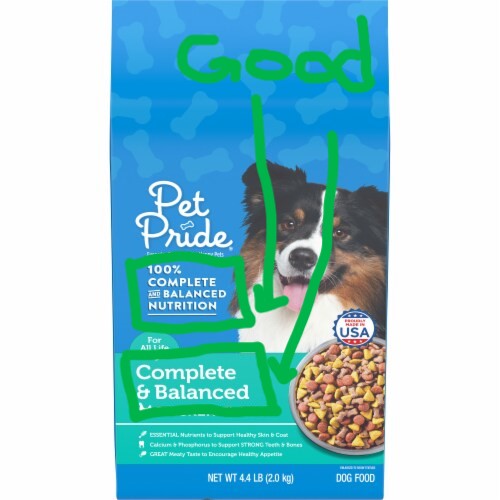
A food which meets the requirements for “maintenance” is suitable for adult dogs with average or normal activity levels. You may have noticed in both tables I listed, the “senior” foods are not included. This is because they are only required to meet the same standards as regular adult dog foods and tend to not actually include any extra nutrients.
How much kibble your dog needs on a day to day basis is determined by many factors, including breed, size, age, and activity level. The feeding instructions that are typically included on a bag of kibble are, in truth, a rough starting point. Owners should adjust this measurement based on the aforementioned factors to ensure the dog maintains a healthy weight. The best way to compare serving sizes and determine what is most appropriate for your dog is by looking at the calorie count. Unfortunately, this may not always be possible as the AAFCO does not require manufacturers to list calorie information on the bag.
If your preference is to give puppy a nice pâté, there are a few things to keep in mind. Per AAFCO labeling standards, a food labeled “dinner,” “platter,” “fare,” “formula,” or “entrée” is required to possess only 25% of the named ingredient, not including water. In a food labeled “Chicken Platter for Dogs,” chicken (which is already ~70% water) may only make up 25% of the food by weight, and it may be the third or fourth ingredient listed.
Wet food also poses some issues in longevity. Many owners dislike that while wet food tends to be more expensive, it also has a greater risk of spoilage after being exposed to air. This is a bad combination for dog owners with canines who enjoy “grazing” at their food throughout the day. However, wet/canned food can still offer a plethora of benefits. While typically having more meat, more appealing taste for dogs, and extra water, wet food is also able to boast a usual lack of preservatives due to the canning process.
Ultimately, it all comes down to ensuring the food is, at the very least, meeting all the minimum standards of canine nutrition. As long as your dog is receiving a balanced and complete diet with adequate levels of the aforementioned essential vitamins, nutrients, and minerals, they are getting everything they need (so, go ahead and pat yourself on the back, you deserve it.)
As always, thank you so much for joining me on my journey to empower owners and their dogs. Have a great morning, day, afternoon, evening, or night… oh, and pet your dog for me…
 The Dog Trainer's Den
Leave a comment